What Actually Happens During an HVAC Maintenance Visit
You signed up for a maintenance plan or booked a tune-up. Here is what the technician is actually doing at your house and why each step matters.
August 19, 2026 · 3 min read
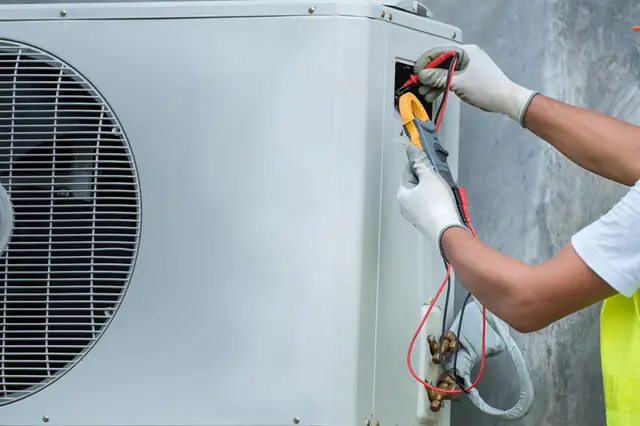
Before the technician touches anything
The visit starts with a conversation. The tech will ask whether you have noticed anything unusual: rooms that do not cool evenly, strange sounds, higher bills, water where there should not be any. These questions are not small talk. A symptom you mention at the start often points the inspection toward a specific component, saving time and catching problems that a standard checklist might not surface on its own.
The outdoor unit (condenser)
The technician inspects the condenser coil for dirt, debris, and bent fins. In The Woodlands, where pine needles, pollen, and cut grass collect against outdoor units all spring, a dirty condenser is the single most common reason a system works harder than it should. The tech will clean the coil, straighten bent fins with a fin comb, and check that the unit has at least two feet of clear space on all sides for airflow.
They will also check the electrical connections at the contactor and capacitor, measure the amp draw on the compressor and fan motor, and look for signs of overheating or corrosion on the wiring. A weak capacitor can cause the compressor to struggle on startup, which shortens its life even though the system still runs.
Refrigerant levels
The tech connects gauges to the service ports and reads the system's operating pressures on both the high and low sides. These readings, combined with the outdoor temperature and the temperature split across the evaporator, tell the technician whether the charge is correct. An undercharged system works harder, runs longer, and can freeze the evaporator coil. An overcharged system puts excessive pressure on the compressor.
If the charge is low, the technician will look for the leak rather than adding more refrigerant. Topping off without finding the leak means you will be low again in a few months and paying for another service call.
The indoor unit (air handler or furnace)
Inside, the tech inspects the evaporator coil, the blower motor, and the drain line. The evaporator coil collects moisture from the air as part of normal operation, and that moisture drains through a PVC condensate line. In southeast Texas, algae and mold can clog that line in a single season. A clogged drain backs water up into the drain pan and, if the pan overflows, onto your ceiling or floor. Clearing the line and treating it with a biocide tablet is one of the most valuable parts of a maintenance visit.
The blower motor and wheel get inspected for dust buildup and bearing wear. A dirty blower moves less air, which makes the system run longer to reach the thermostat setpoint. The tech will also check the air filter, though ideally you are changing that yourself every one to three months depending on the filter type and whether you have pets.
Electrical and safety checks
Every maintenance visit includes a check of the thermostat calibration, the disconnect box, the breaker, and the safety controls. On gas furnaces this also means checking the heat exchanger for cracks, testing the gas valve, measuring the flue draft, and confirming the carbon monoxide readings at the vent. These checks are not optional add-ons. A cracked heat exchanger is a genuine safety hazard, and a maintenance visit is how it gets found before heating season starts.
The temperature split test
Before wrapping up, the tech measures the air temperature at the supply register nearest the air handler and at the return grille. The difference between those two readings (the "split") should fall between 15 and 22 degrees Fahrenheit in cooling mode. A split outside that range signals an airflow problem, a refrigerant issue, or a failing component, even if the house feels comfortable in the moment.
Why this matters for the system's lifespan
Most HVAC failures are not sudden. A capacitor weakens over two summers before it fails. A drain clogs gradually. A blower motor draws more amps each year as its bearings wear. Maintenance catches these trends while they are still cheap to fix, rather than expensive to replace.
Cold Front A/C of The Woodlands (TACLA95237E) runs maintenance plans with proactive scheduling, so you do not have to remember to call. Reach them at (832) 559-8236.
Cold Front A/C Of The Woodlands, (832) 559-8236
Call (832) 559-8236More articles
Should You Replace Your AC or Repair It? A Practical Guide for Woodlands Homeowners
The repair-or-replace question comes up every summer in The Woodlands, and the honest answer depends on four things you can check yourself.
Your AC Runs All Day but the House Still Will Not Cool Down. Here Is Why.
The system is running, the vents are blowing, the thermostat says 82, and it is set to 74. Five things to check before you call for service.